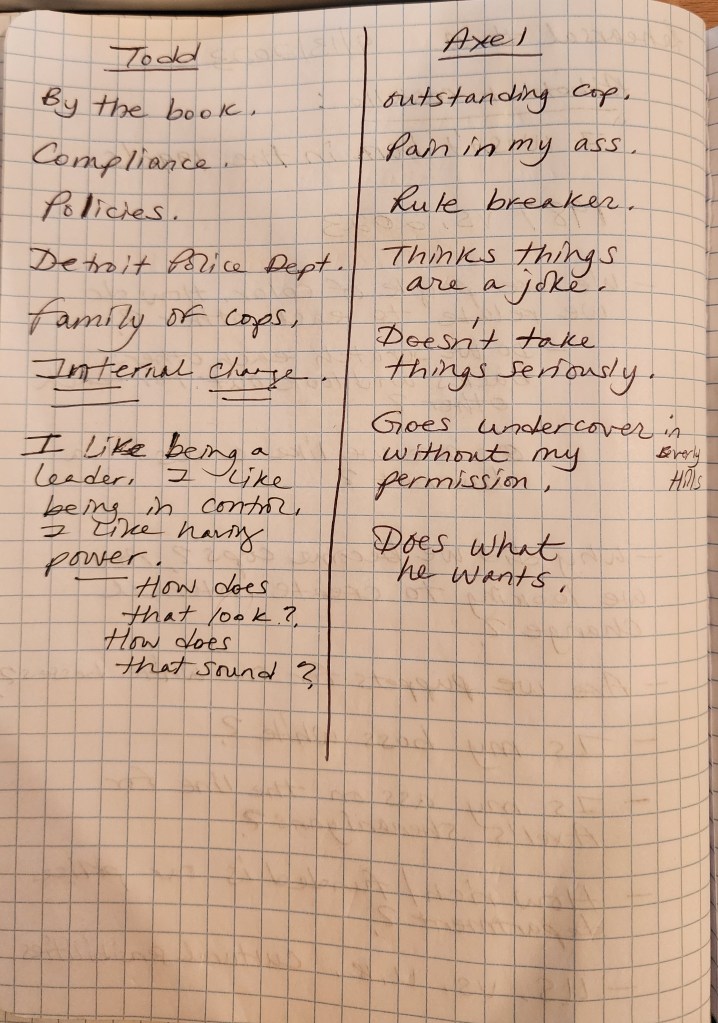
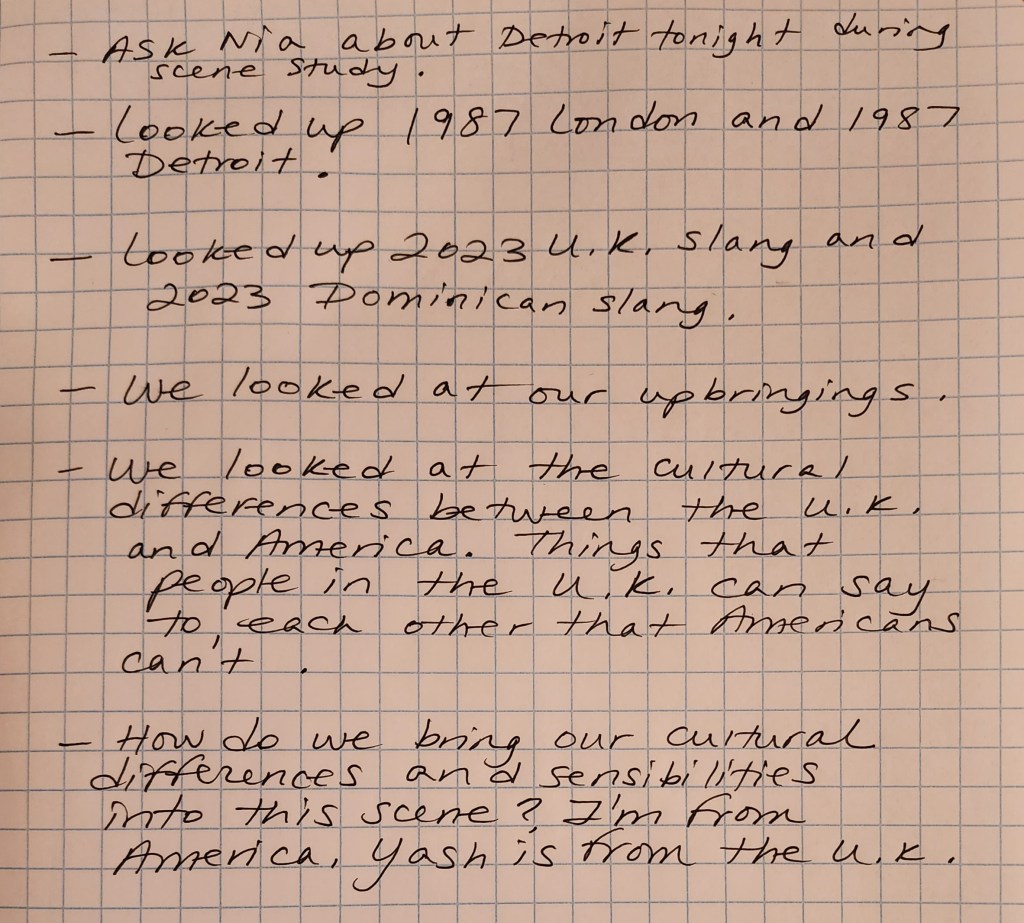
Recap: Sundance Collab Week 4.

Hello, my fellow artists! I am recapping my weekly experiences of the writing course I’m taking at the Sundance Collab. These recaps are a cool insight into the creative process and personal journey of building something from scratch. In this case, a feature film treatment.

Recap: Week 4. Last week, I shared how my causative routine was going, plus the creation and exploration of the other characters in my feature film. This week’s class was exciting because it focused on the overall arc of our story. What’s our story about from beginning to end? Also, how do the characters drive the story forward? Our homework was to write a one-to-two page summary of our story. The basic beginning, middle, and end. Keep reading below šŸ™‚

Woo hoo! Here was an opportunity to tell my story from beginning to end. Here was an opportunity to see if my idea could go the distance from fade in to fade out. Let’s do this! The homework also confirmed what I learned in class: Each new generation consumes more and more stories via film, television, and streaming, and so most people today inherently have a strong sense of storytelling. I share that because I was pleasantly surprised at how much story poured out of me when I sat down to type. I understood the overall framework and arc of my story. I knew where it started and where it ended. When I finished, I had written several pages worth of my summary LOL. Good problem to have because I can always edit it down. I can always cut the cloth shorter. Keep reading below šŸ™‚

While editing, I kept telling myself to focus on the main points. Describe more succinctly. Don’t be precious with every word. Get it down to one to two pages. I finally did and sent it over to my advisor for feedback. I felt accomplished. I felt like I did my best. She said I did a great job and that she loves a sports story. She also asked me a couple of questions regarding my story and to make sure that the emotional drive for my character is coming through. Her feedback and questions were helpful and they inspired me to continue looking at my story and ask more questions. Keep reading below šŸ™‚

See you all next week when I recap week five! (Oh yeah, ever since this course began, I’ve also been doing extra research outside of class that will help me out when I eventually write my feature film script.)

Recap: Sundance Collab Week 3.

Hello, my fellow artists! I am recapping my weekly experiences of the writing course I’m taking at the Sundance Collab. These recaps are a cool insight into the creative process and personal journey of building something from scratch. In this case, a feature film treatment.

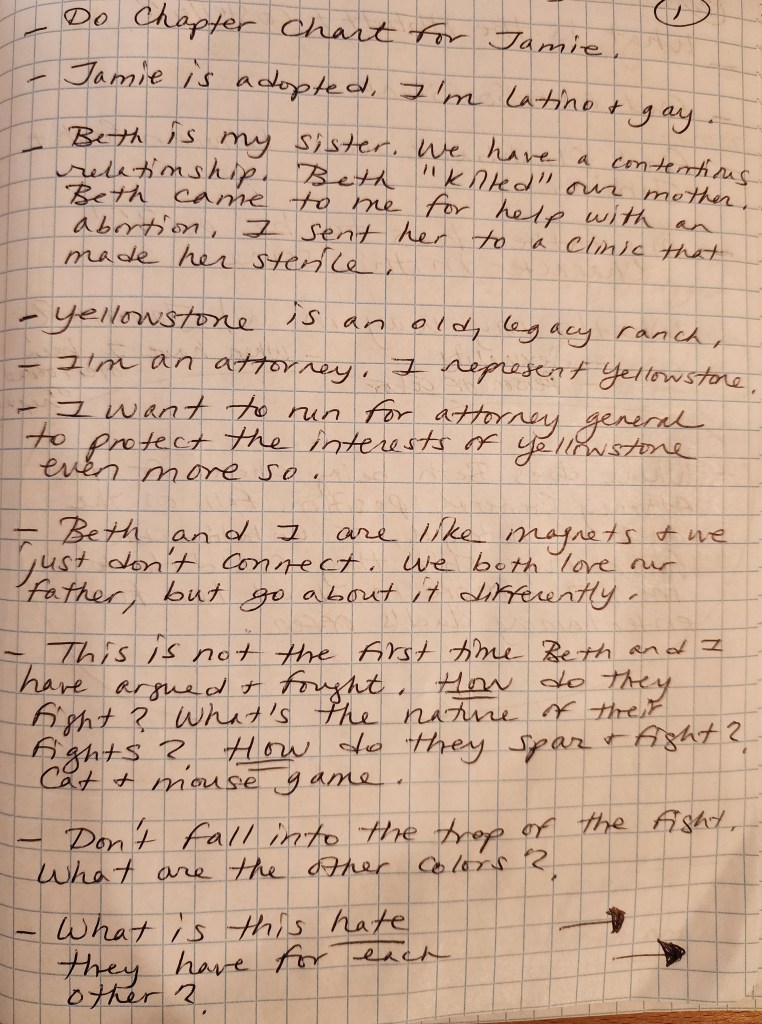
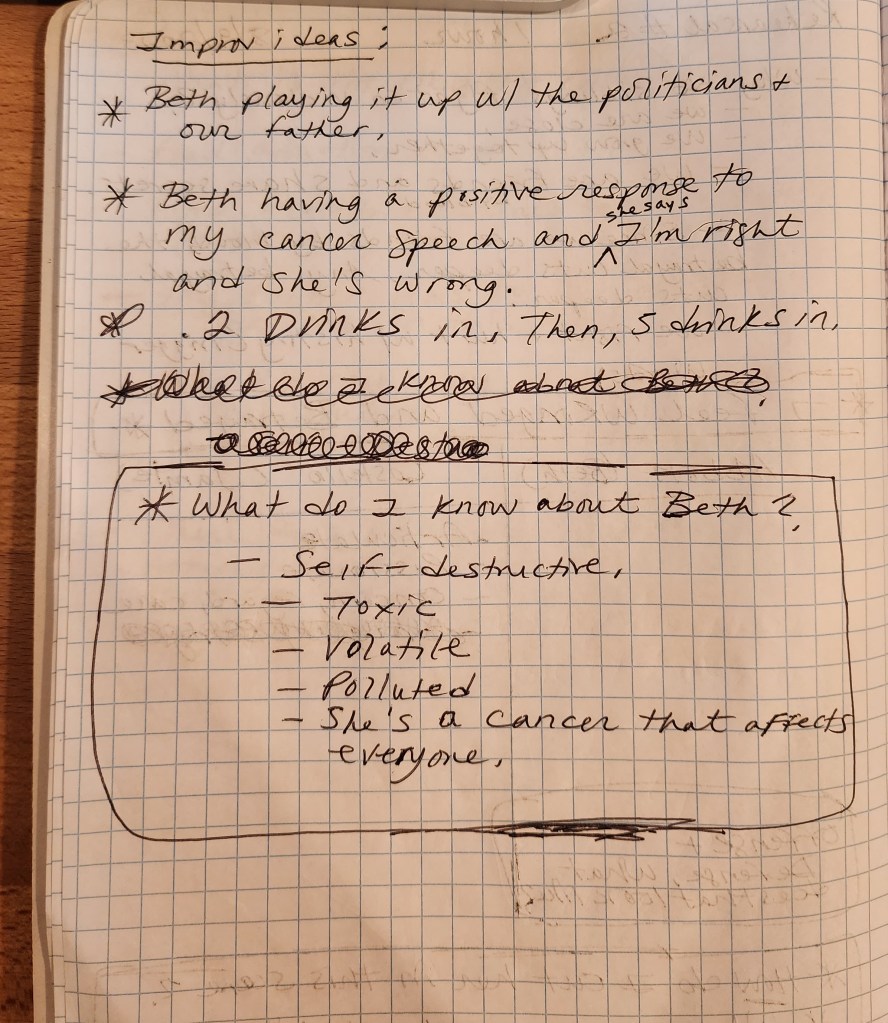
Recap: Week 3. First, my causative routine is going great. The schedule that I have created has set me up for success with this course. This week was about the creation and exploration of the antagonist and other supporting characters in my protagonist’s world. Just like I did last week with my protagonist, I had to fill out the same character questionnaire for at least two more characters in my story. I chose the antagonist and the love interest. Keep reading below šŸ™‚

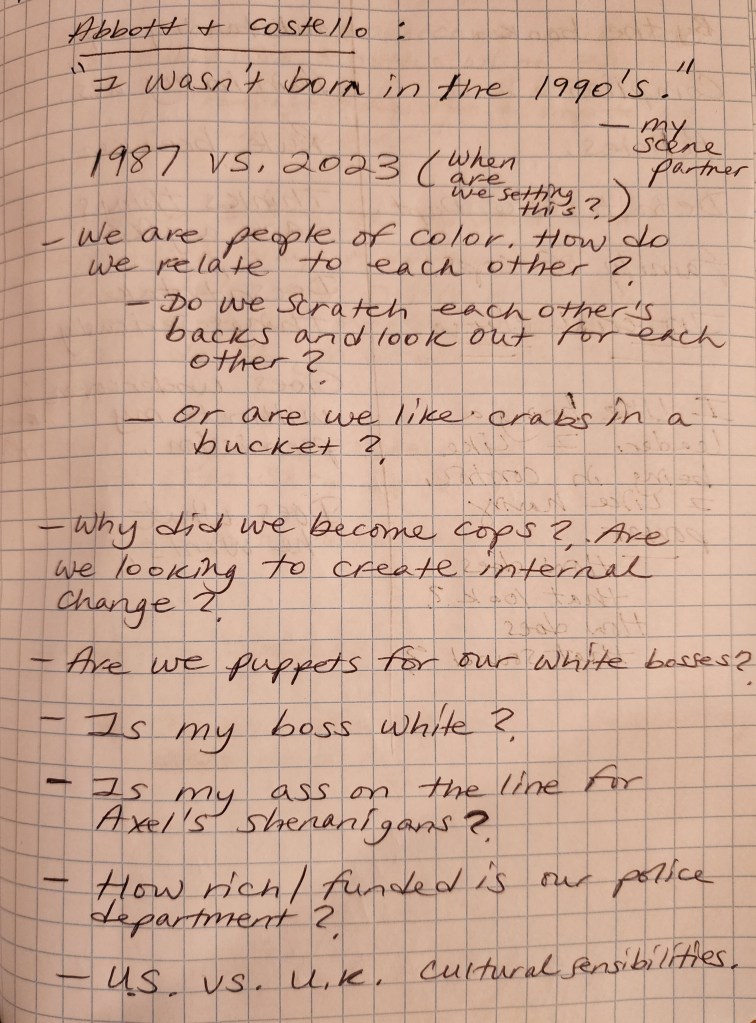
In addition to filling out the character questionnaires, I also had to identify character qualities for my antagonist and love interest to create conflict and opposition with the protagonist. In other words, their assets and liabilities (like I also did last week for my protagonist.) There were certain qualities I was able to identify quickly, while others became placeholders. To get more clarity on these placeholders, I looked them up in different online dictionaries. I also looked at my protagonist’s qualities and asked myself, “What’s the opposite of these?” So if Luke (the working name of my protagonist…remember, I jokingly lamented last week that I’m bad with creating character names LOL) is reserved and shy, then Adam (the working name of my antagonist) is loud and cocky. Now I have Abbott and Costello. I have the beginnings of conflict. Keep reading below šŸ™‚

I want to keep carving out my antagonist to make sure they are not bad just for the sake of being bad. In their mind, they are doing the right thing. They don’t think their actions are wrong. Keep reading below šŸ™‚

I also wanted to share that I had to be willing to turn off “My Story Can Beat Up Your Story”. I’ve used this book by Jeffrey Alan Schechter since 2014, so I had some fear and nervousness of letting it go. But going into this course, I made a commitment to lean into this new teaching instead. I wanted to be open and present to a different approach. And it’s been going great! That being said, Jeffrey’s book has come in handy a couple of times as a reference point, a translation point, where I said to myself, “Oh, Jeffrey calls that the thematic synthesis. Oh, he calls that a compelling goal. I got it. It makes total sense in terms of what I’m learning now.” It’s like an actor having an established approach and then going into a new school to study. The new school teaches them about “moments” and the actor says, “Oh! A moment is like a beat. Got it.” Or the new school teaches them about “urgency” and the actor says, “Oh! Urgency is like picking up the pace. Got it.” So it’s been cool to hear some things in a different way that still translates and makes sense to me. Keep reading below šŸ™‚

See you all next week. Week 4 will tackle story arcs, beginnings, middles, and ends, and story plot. And at some point, I’ll talk about office hours with our advisor.

Recap: Sundance Collab Week 2.

Hello, my fellow artists! I am recapping my weekly experiences of the writing course I’m taking at the Sundance Collab. These recaps are a cool insight into the creative process and personal journey of building something from scratch. In this case, a feature film treatment.

Recap: Week 2. This week was a testament and confirmation of what I talked about last week in terms of asking the next question. Week 2 was all about the creation of my main protagonist! My hero! The person the audience will follow and root for from beginning to end. There were three homework assignments for this week. The first homework assignment contained 29 questions to help me create my character and understand who this person is. At first, I was like WTF at some of the questions, but I realized that each question (and answer) painted more of my protagonist’s picture. I discovered things about my character that I would not have thought about or considered if it wasn’t for these questions. And I realized that a few of these discoveries will make their way into my script as dialogue and moments (I see what you’re doing there, Sundance!) The second and third homework assignments continued with the exploration of my protagonist. Some of these things will also make their way into my script. Keep reading below šŸ™‚

I also created a causative routine that set me up for success. I will continue to utilize this routine each week because there’s a lot of homework. I know which day I start my homework, and I use the WHOLE week to carve it out. As I mentioned last week, I took the pressure off myself to have all the answers in one day. Having a routine allows me and my work to breathe. Each day provides an opportunity to know more and push my work further. I gain greater insight into what I’m creating through my causative routine. When I finish my homework for the week, I feel like I have done my best. And just as important, my causative routine keeps me SANE because I’m not scrambling or cramming to get it all in. Keep reading below šŸ™‚

Outside of the assigned homework, I also did research to find real-life prototypes for my protagonist in terms of images and interviews. This research helped me to see and hear my character in three-dimensional form. And in turn, this research informed my homework. I also realized that I suck at creating character names LOL. It’s the reason why I recycle the same names in my writing work LOL. I somewhat agonized over finding names for my protagonist (and the other characters in their universe.) I had to remind myself of the importance of placeholders. Don’t get precious. Pick a name and move on. I can always change them later once I learn more about my characters. Or not. Perhaps Luke is the best name for my protagonist. I mean, names are important, right? It’s a part of their identity. Right? I’m going to be dedicating my entire life to these characters, so I gotta love their names, right? Right? RIGHT? LOL. See you all next week for a recap of week 3!

Recap: Sundance Collab Week 1.

Hello artists! As mentioned last week, I got accepted into a screenwriting course at the Sundance Collab. This course will help me take an idea for a feature film and create a fully realised treatment for it. Also, as mentioned last week, I am recapping and sharing my personal experiences each week as I build a feature film treatment from scratch.

Recap: Week 1. Two things I wanted to share. 1) Everything really boils down to, “What is this about?” Whether I’m doing a scene in acting class or writing a movie, it’s all about understanding what something is about. That’s the driving force that helps paint the picture (or write the script, in this case) and informs the choices we make. Keep reading below šŸ™‚

2) I also told myself to take the pressure off. Looking at the homework for week one, I felt I needed all the answers to everything in one day. For example, I felt like I needed to clearly and expertly articulate what my movie was about in one day. And when I couldn’t, I started to have a little doubt. “Uh oh, what did I get myself into? Perhaps this is a stupid idea for a movie.” I had to handle myself to remove this pressure and doubt. Once I did that, I allowed my training to kick in. I said that I have to be okay and comfortable with the unknown. I’m starting a journey from scratch. Don’t be afraid of the unknown. Why? Because I can ask the next question. I asked the first question that came to me. Great! I now had either a placeholder or a definitive answer. And from there, I kept asking the next question. Each placeholder or definitive answer allowed me to take another step forward. Each answer provided more clarity. I allowed myself to be patient with the homework and to let the answers come to me. I did what I could to fill in the blanks each day. As the days in week one progressed, I started thinking about other movies and art forms that could help me shape and articulate my answers. I also got on my feet, walked around, and attempted to answer my questions. By the end of the week, I finally arrived at an “a-ha” moment. I knew what my story was about. Keep reading below šŸ™‚

Ask the next question no matter what it is: rehearsals for a scene, an audition, a script you’re writing, etc. See you all next week for my week two recap on developing the protagonist!

My Acceptance Into Sundance Collab!

Hello, fellow artists!Ā I applied for a feature film writing course at the respected and prestigious Sundance Collab and got in! I’m taking their Screenwriting: Core Elements course because I have an idea for a feature film, and this course will help me create a fully-realized treatment for it. I would love to take you all on this nine-week journey. I won’t share any proprietary information from the course, but I’ll share my personal journey/experiences each week to create a feature film treatment from scratch. Keep reading below šŸ™‚

And just for fun, I included my answers to two of the questions on the application. Keep reading below šŸ™‚

Enter a brief bio (max. 200 words) I am a fierce Dominican and Puerto Rican entity who was born and raised in a mythical land called Brooklyn. I attended Vassar College (which is located in another mythical land called Poughkeepsie.) It was at Vassar that I discovered that goddess Meryl Streep graduated from there. Soon after graduation, I moved to Los Angeles to find Meryl Streep. Then, I shifted gears and focused on discovering and applying my raison d’ĆŖtre: To open the closet door, and through storytelling, reveal another side of life that is usually kept hidden: Stories about Latinx and queer experiences, unconventional relationships, the notion of what is beautiful, etc. Since living in LA, I’ve written two feature films, two pilots and corresponding episodes for them, numerous short films, and I’ve pitched one of my series to CBS, Showtime, Logo, Here, and YouTube. I was featured in the Huffington Post’s Medium website for my weekly industry blog called Chasing The George. Since 2015, my blog highlights the journey I’ve been on to build the artistic career I want, while also sharing the advice and lessons I’ve learned along the way. Keep reading below šŸ™‚

If your identity or background is a strong influence on your work, please elaborate on that here. I remember being 12 years old and telling my 5-year old nephew that I wanted to be Superman (Superman was the reason why I wanted to be in the entertainment industry.) He said to me, “You can never be Superman.” I asked, “Why not?” He said, “Because you’re brown.” I was crushed by his statement. I felt that he had obliterated my dreams. But as time went on, I couldn’t fault him for saying that. I ended up feeling for HIM because I knew his statement came from a lack of minority representation in the media. It came from a limited view of what we, as marginalized people, can do. And so I committed to changing the narrative so that my nephew, and all other marginalized groups, could SEE infinite possibilities. I write to out-create limitations and to create infinite worlds of possibility. I write to see myself, my stories, my voice, and my experiences. I write to be counted and included in the human experience. I understand the power of art to create change, inform, inspire, provoke, and celebrate. Writing allows me to do all of that and be my own Superman.

SAG-AFTRA On Strike.

SAG-AFTRA has officially gone on strike, and I am providing links to resources and FAQs to help my fellow actors during this time. With SAG-AFTRA and the WGA striking simultaneously, this is a crucial moment for our collective future as artists. I support our efforts and determination to protect our work, worth, talent, and future.

For frequently asked questions regarding the strike, picket times and locations, news updates, work you can and can not do, etc., please go to: https://www.sagaftrastrike.org/

Strike notice and order to all members of SAG-AFTRA: https://www.sagaftra.org/files/sa_documents/Strike%20Notice%20to%20Members.pdf

An Important TV/Theatrical/Streaming Strike Update: https://www.sagaftra.org/files/sa_documents/SAG-AFTRA_Negotiations_Status_7_13_23.pdf

There are many articles out there regarding the strike, what it means, and why it’s happening. Here is one that breaks it down in a clean, simple way: https://www.harpersbazaar.com/culture/politics/a44506329/sag-aftra-actors-strike-hollywood-explained/

200 Blog Posts!

WordPress alerted me recently that I have written 200 blog posts on their site!! Wow!! Also, Happy (early) Anniversary to Chasing The George!! I’m celebrating early! On July 15th, 2015, my teacher and mentor, Richard Lawson, encouraged me to write a weekly blog where I would share my artistic journey, advice, stories, and interests with other artists. A ā€œHollywood 101ā€ if you will that reveals and shares the sustained effort, work, and fun it takes to have a career in this industry. Thank you, Richard! What a journey it has been! Walking the walk as you teach us to do. Fun fact: My blog originally started on Tumblr before I moved it over to WordPress (LOL for anyone who is doing the math and wondering how it’s only 200 blog posts since 2015…I switched platforms and also took a few breaks with my blogging.) Keep reading below šŸ™‚

Thank you to everyone around the world who has supported my blog over the years. Thank you to everyone who has read, shared, commented, and continues to be inspired by this one artist’s bravery to put himself out there and share his artistic life and journey. Thank you for witnessing how I found and strengthened my voice through this blog. Thank you to those who encouraged me to blog again when I stopped for periods of time. I’ve shared wins. I’ve shared lessons. I’ve shared highs and lows. I’ve shared so many things from how to get an agent to how I got my script to James Franco to how I feel I can’t act when I start a new rehearsal process (and how I combat that) to how I outlined a feature screenplay in two weeks to how I booked a national commercial by following my impulse to cry. Keep reading below šŸ™‚

Wow! 200 blog posts!! I am so grateful not only because of the sheer amount of writing I’ve produced, but because I’m still in the game. I achieved 200 blog posts because I’m still in the game. I haven’t given up. I won’t give up because I can’t live without my art. I NEED to be an artist, and I have a healthy, supportive career bus that keeps me going and holds me accountable. I have a wonderful community that I can lean on and grow with. I’m grateful to still be an artist in this industry. I’ll see you all next week! Onward and upward! Keep reading below šŸ™‚

Which Writing Competitions To Submit To.

For my fellow screenwriters and TV writers out there who are interested in submitting content to writing competitions, but don’t know where to start, I hope that my blog entry will help. I have been submitting to writing competitions this year (and in previous years.) And let me make it clear that because the writers strike is still going on, the information I’m providing is done with respect and support to their cause. The information provided does not go against the writers strike rules.

I read a great interview for pre-WGA writers titled, “Writers Strike Dos and Don’ts for Pre-WGA Writers, Explained by the WGA” that has confirmed and shaped how I’m writing today’s blog entry around writing competitions. Keep reading below šŸ™‚

As with film festivals, there is a PLETHORA of writing competitions. It can feel daunting when looking at the myriad choices out there. For example, when I logged into my Coverfly account today, the dashboard listed 194 writing competitions. 194?! What?! By the way, “Coverfly is the industry’s largest screenwriter talent-discovery platform, connecting emerging screenwriters with literary managers, agents, producers and development executives.” It’s a central, convenient hub that contains a huge listing of different writing competitions. Keep reading below šŸ™‚

Submitting to writing competitions as a way to get your work out there, to get noticed by the industry, and to receive feedback or coverage, can become expensive. Don’t just blindly submit because submission fees add up quickly. The best advice I can give you before you begin your journey is to do your homework and research. Aim for the big ones (because why not?) and aim for the ones geared to the type of script you have written for a more specific, bullseye approach. Not all competitions are equal and built the same way. Some have been around for a while and are highly-regarded and respected. Others are brand new and have only been in the game for a year. Some competitions come and go. Keep reading below šŸ™‚

Some factors to consider: how long the competition has been in existence, its mission statement, its end goals for the writers who enter and win, the judges involved in the competition, the sponsors behind the competition, whether it is a genre-specific/niche competition that matches your script, etc. Do the research and decide for yourself. Listen to your instincts and use your common sense. Also, read the WGA interview at the end so that you understand the do’s and don’ts of writing competitions while they are on strike. Keep reading below šŸ™‚

Below, I have listed 10 established, industry-recognized writing competitions thatĀ I have been submitting to this year (and in previous years.) Plus, I included a link to Coverfly. I found these writing competitions based upon industry colleague recommendations and through my own research. There may be a lot more established, industry-recognized writing competitions, but at least this list will get your wheels going. And with the exception of the Academy Nicholl Fellowships which only focuses on screenplays, the other competitions listed below accept both screenplays and TV scripts. If there is an asterisk (*) in front of a particular competition, it indicates that they have put out a written statement that they support the WGA’s strike efforts and will not go against their strike guidelines. For those competitions below (or any not listed here) that haven’t put out a written statement regarding their support of the writers strike, reach out to them directly. And before you submit, read what the WGA recommends in their interview below. Keep reading below šŸ™‚

WGA Interview: https://www.moviemaker.com/writers-strike-rules-pre-wga/

1) Academy Nicholl Fellowships:Ā https://www.oscars.org/nicholl

2) *Austin Film Festival:Ā https://austinfilmfestival.com/submit/screenplay-and-teleplay-submissions-2/

3) *Final Draft Big Break:Ā https://www.finaldraft.com/big-break-screenwriting-contest/

4) Page Awards:Ā https://pageawards.com/

5) *ScreenCraft:Ā https://screencraft.org/screenwriting-contests/

6) Scriptapalooza:Ā https://scriptapalooza.com/

7) Script Pipeline:Ā https://scriptpipeline.com

8) *Shore Scripts:Ā https://www.shorescripts.com

9) *The Black List:Ā https://blcklst.com/

10) Tracking Board Launch Pad:Ā https://tblaunchpad.com/

11) Coverfly: https://www.coverfly.com/ “At Coverfly, we proudly support the rights of writers and theĀ WGA’s efforts to ensure fair compensation for their work.Ā Coverfly stands in solidarity with the WGA and its efforts to ensure fair, livable compensation for the work of writers. For information on how you can stay within the WGA strike rules and procedures while submitting for competitions, please contact the competition organization directly.”

My Major Revelation About Career Policies!

Hello fellow artists! Here’s to another week of moving my acting and writing careers forward. My goals for this year are to continue booking theatrical and commercial work and to sign with a new literary agent. These goals are tied to a larger postulate of mine within my DOIN (Declaration of Independence aka business plan.)

As I pursue these goals, it’s important that I have policies in place. With any business, policies are essential to keep it running and operating on a high level. Policies keep it afloat and on track to achieving their various short-term and long-term goals. Here’s the definition of policy: a definite course of action adopted for the sake of expediency, facility, etc. a document embodying a contract of insurance. I’ve always understood this definition on an intellectual level and have had various degrees of success with implementing policies to keep my business (aka Jorge Ortiz Inc.) alive, healthy, and on track. Keep reading below šŸ™‚

At the beginning of each year, I create a postulate DOIN for that year (A sub-DOIN from my main DOIN, if you will.) It’s a way for me to choose one postulate from the list and focus on it for the year. When I got to the policies section, I couldn’t help but feel uninspired and disconnected from what was there the year before. I had several policies listed that I wasn’t executing or honoring. These policies weren’t a contract of insurance. They weren’t things I had to do. Let alone, I didn’t even understand why I had to do them. For example, consume at least 50% organic food every day. Okay, I love organic food. I like being healthy. But WHY is this a policy? How is this policy connected to WHAT I’m trying to achieve as an artist? Why is this policy here in my DOIN? Keep reading below šŸ™‚

And then, I had a major revelation. I realized that policies are connected to a specific postulate! BOOM! I am on a journey to achieve a postulate. A postulate sits at the very top of the mountain. So, what policies do I need to establish to help me get there? BOOM! It all made so much sense to me. Of course! Armed with this revelation, I identified five policies that I felt would support my journey towards my postulate. I understood the WHY behind these policies. I understood WHY I needed to do them. These five are enough for now. If I add a few more arbitrarily, I will set myself up for disappointment. I need doable, tangible, executable policies that SERVE my postulate. Below, please see the postulate I’m focusing on for this year and the five policies attached to it. Keep reading below šŸ™‚

Postulate: I am one of the top, consistently working, bankable, and respected actors, writers, & executive producers in Hollywood. Keep reading below šŸ™‚

  1. Execute at least one item of career administration Monday through Friday. Administration means the actions I’m taking to achieve my acting and writing goals. I know when to execute these actions each day. I know what these actions will consist of because I pull them from the administration plans written within my DOIN (On Sundays, I look over my DOIN and write out my administration for the week in my calendar.)
  2. Use social media as a platform to engage with others and to share about myself at least once on Mondays, Wednesdays, Fridays, and Sundays. Pretty self-explanatory! I’m consistent about the times I post on social media and what exactly I post on it.
  3. Practice and memorize sides once a week. I know which day of the week I do this on. This is important to keep my mind sharp.
  4. Return communications within 24 hrs. In terms of how I want to be seen and respected in this industry, this is a must.
  5. Take Lion’s Mane Mushroom supplements every morning at 8am. Healthy brain regiment so that I can operate at the highest level possible as an actor and writer. Keep reading below šŸ™‚

Those are my policies! And here’s the other thing that I realized about the power of policies. For the last two weeks, I’ve felt somewhat uninspired and discouraged. I felt like I wasn’t accomplishing anything. And then I remembered what Richard Lawson once said about policies: “If you don’t do your policies, you take a loss on them…Policies also determine the quality of the trip and the consistency of it. These things help to sustain the effort of the trip when they are applied, and when you start breaking policies–policies are directly connected to statistics. If you keep statistics of certain things, you will notice that your statistics will drop when your policies deteriorate.Keep reading below šŸ™‚

Of course! I fell off my policies for the last two weeks. That’s why I felt uninspired. My administration statistics went down because I got off track with my policies. DUH! That being said, the beauty of this is that I can quickly get back on my policies.Ā (My apologies to anyone if I didn’t return communications to you within 24 hours over these last two weeks!) Keep reading below šŸ™‚

What policies are keeping you on track towards your dreams? Let me know in the comments section below!

How A Teacher’s Letter Impacted My Career.

Hello artists! Something compelled me recently to pull out my Vassar yearbook. Perhaps I wanted to look at my senior year photo (I did, and LOL, I had a full head of hair.) Anyway, a handwritten letter fell out of my yearbook. It was a letter from a teacher I had in fourth grade named Ms. Rosen. I totally forgot about her letter and the fact that I tucked it away into my yearbook.

In elementary school, I wrote several short stories where I reimagined/adapted existing movies or TV shows like “Nightmare On Elm Street” and “The Bionic Woman”. There was something so wonderful about writing these worlds and being able to escape into them. As soon as I finished a short story, I shared it with Ms. Rosen. After sharing several short stories with Ms. Rosen, she wrote me a letter. Keep reading below šŸ™‚

As we know, teachers can play a pivotal role in our lives. And sometimes, it can be for better or for worse. Teachers can make or break us at any point in our educational journey. They can make or break our dreams, our confidence, our ability to see further, our sense of possibilities and havingness. I’ve met many students with a deferred dream or failed purpose because they had teachers who discouraged them and tore them down. Fortunately, Ms. Rosen’s letter was uplifting and encouraging. She praised my writing and challenged me to tap into my point of view and imagination moving forward. She knew that I had more interesting, original stories to tell. What does JORGE have to say? What is UNIQUE and PERSONAL to him? What is in Jorge’s IMAGINATION? Create new worlds, don’t be derivative. Ms. Rosen’s letter wasn’t a “make wrong”. Her letter impacted me and laid the groundwork for writing about things that are personal to me, compelling, different, and a little dangerous. Her letter also laid the groundwork for the type of teaching and instruction I respect and admire (it’s why I have studied with Richard Lawson for so long. He he draws out my voice, uniqueness, and imagination by asking the next question.) Fun side note: I attended Vassar because of my guidance counselor. I knew nothing about the college application process. I didn’t know what colleges to research. I walked into my guidance counselor’s office one day during my junior year with all these brochures I randomly picked up at a college fair my high school was hosting. My guidance counselor looked through the brochures, put them aside, and said, “No. You can do better than these. You’re going to Vassar.” She saw something in me. She knew I was worthy of something higher. She added Vassar to the list and helped me identify other great schools that best fit me and what I wanted. Thank you so much, Ms. Ham! Keep reading below šŸ™‚

Below is the front and back of Ms. Rosen’s letter. In case you can’t read her handwriting, I transcribed her message below the pictures. Thank you so much, Ms. Rosen! Time to keep moving forward with the first draft of a feature film I’m currently writing with my friend and colleague. Keep reading below šŸ™‚

Dear Jorge, First of all, let me apologize. I am so sorry it took so long for me to get your story back to you. I hope it didn’t upset you or cause you any inconvenience. I also hope you will continue to share your work with me. I promise I will not delay in returning anything else to you. It gives me such pleasure to see how your writing is developing and I hope you will trust that I won’t let such time elapse again. As always, your descriptions and use of details are marvelous. You create vivid images, which all good writers in any genre need to do. You use powerful verbs which give your writing an energy-one that keeps the reader’s interest. Let me explain my feelings about gore and scary stories. It’s not that I don’t particularly like them. It’s more to do with my feelings that gory is not as original as other types of works. “Freddie” and “Bionics” are not new to literature. I believe that with your talent, your gift, you can, might, explore other avenues for where and how your writing may excel. I’m happy to learn that you are indeed branching out and have written a soap opera. It’d love to see your character development on that. I’m also interested in seeing your essays. Are you writing any for school? Is the soap opera for you or for an assignment? Please keep me posted. I wonder, have you given thought to writing news editorials or book reviews? Keep up the good work! Keep in touch. I have enjoyed speaking with you tremendously! Fondly, Ms. Rosen.