Slamdance Coverage: Tackling the Act 2B “Warrior Phase”

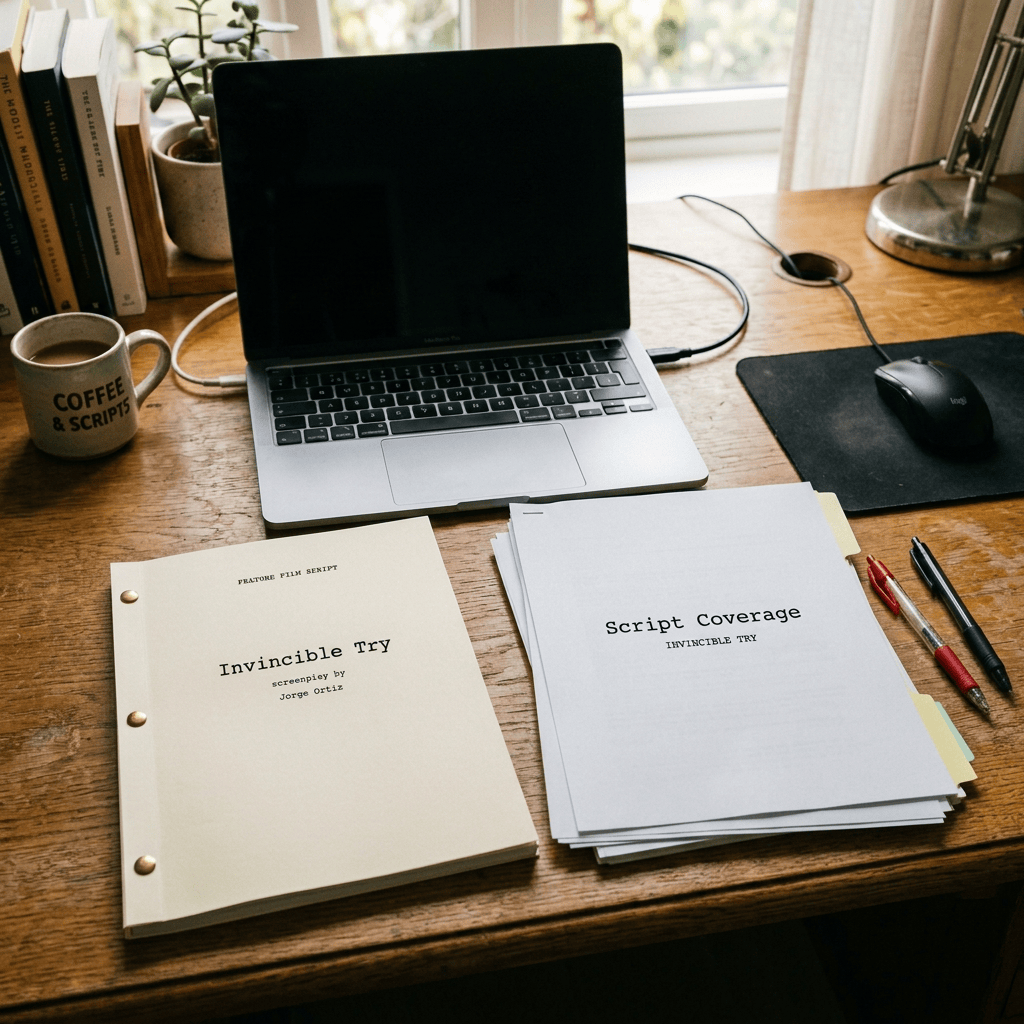
Good morning, fellow artists! Welcome to another exciting edition of my weekly Hollywood blog. I’ve officially begun applying my Slamdance coverage notes to the second half of Act Two for my latest feature film script, and I wanted to share a couple of those insights with you today:

Act Two B: It’s good, and now we add the element of ************ [spoilers redacted!] This exacerbates a lot of things, but the conflicts, stakes, consequences, threats, and end-of-act low point could all be bigger.

We want realistic, high-stakes and huge conflicts—especially going into the end of the act, where all should seem lost. Make everything crash and burn. Feature films make audiences unable to predict how this could ever be resolved, and then you resolve it (usually with things you’ve set up or planted beforehand). Really show how hard this is.

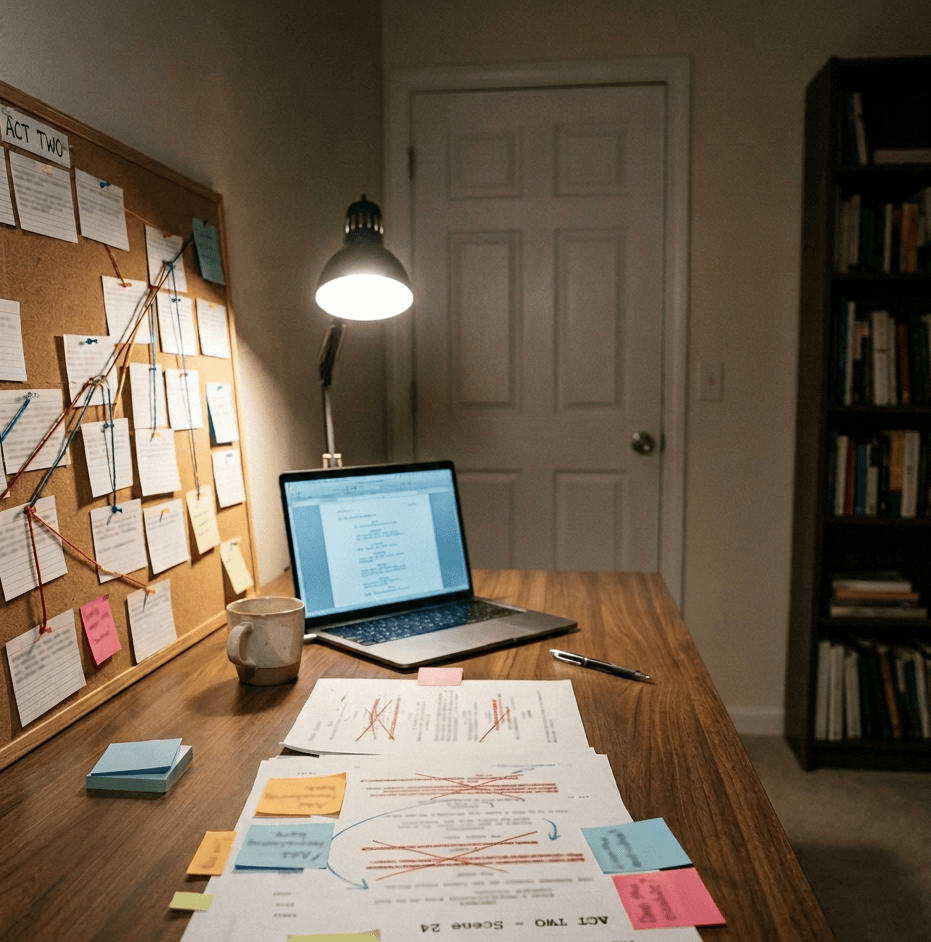
Armed with these directives, I created a bulleted list of every challenge my protagonist faces during this phase of Act Two—which Jeffrey Alan Schechter calls the “Warrior Phase” in My Story Can Beat Up Your Story. At this point in the script, every obstacle should prove tougher than the last as the protagonist fights through, getting bloodied and beaten (literally or figuratively), to achieve their compelling goal.

Laying out the challenges allowed me to see the progression of these obstacles and where I needed to raise the stakes to make everything truly “crash and burn.”

I’m thrilled to be tackling this section of the script, and I’m proud of the progress I’ve made so far. These coverage notes have provided a clear, sharp path as I push through this second draft.

See you next week!

Hiker standing on a rugged mountain path beneath storm clouds

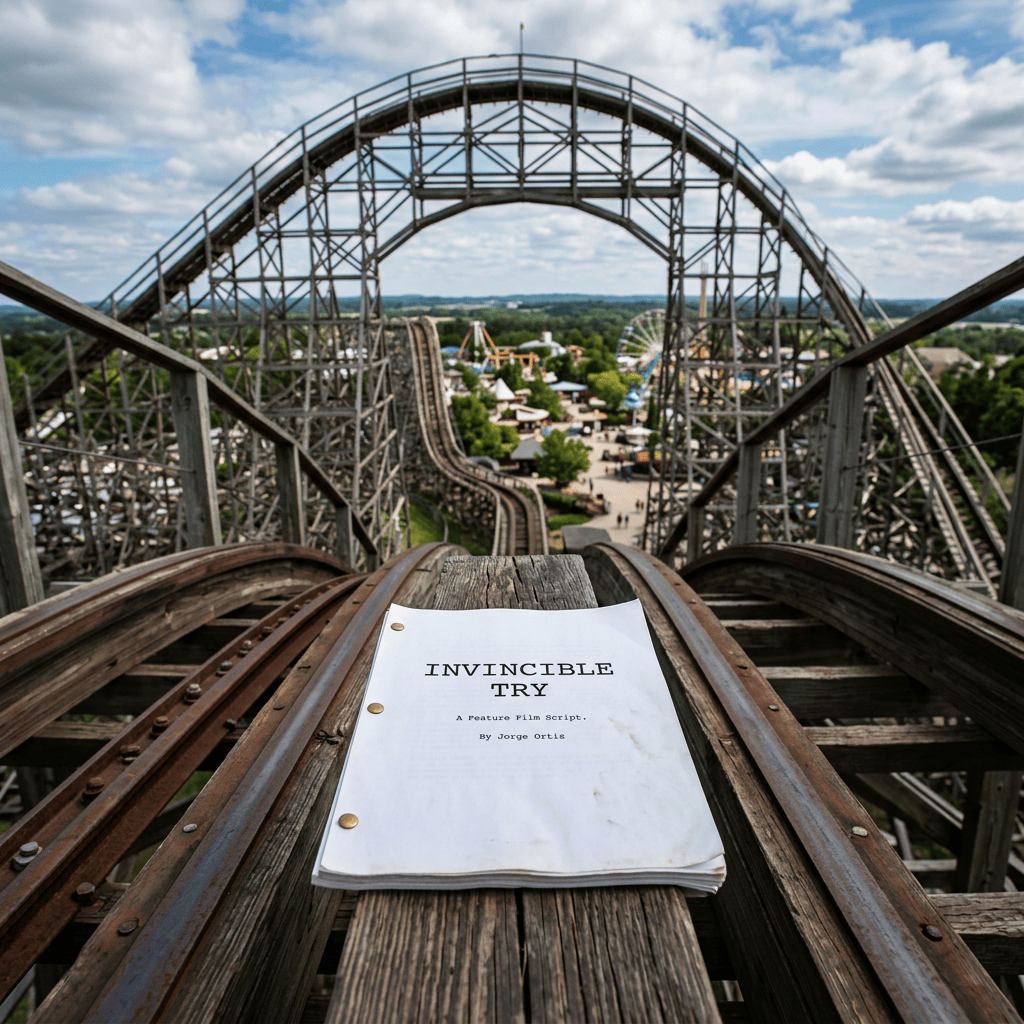
Riding the Rewrite Roller Coaster: Tightening Act One & The Midpoint

Good morning, fellow artists! Welcome to another exciting edition of my weekly Hollywood blog. This past week, I decided to go through the first half of my latest feature film script one more time to continue tightening up the story. Now that I’ve finished that pass, I’m excited to jump into the second half of the script and keep applying my Slamdance coverage notes—working out of both my home office and car office to get it done!

I wanted to share some quick, fun numbers with you:

  • The first draft of my script: 109 pages
  • After applying Slamdance coverage notes to the first half of my script: 117 pages

As I mentioned in a previous blog post, I was prepared for the page count to go up initially. At the time, I wrote:

“At the same time, I realized that the script length increased by five pages. I have to remind myself that it’s okay—this is just part of the rewriting process. If anything, it’s better to have extra pages to cut down later than to fall short. It’s also likely that as I move onto more scenes, I will naturally delete things that decrease the page count. I should be prepared for the number to fluctuate as I continue. Ultimately, I won’t know my final page count until I finish this second draft, but I will be ready to edit appropriately to strengthen the story and bring the script to a manageable length.”

By going through the first half of Act Two a second time to make targeted edits and cuts, I’ve already trimmed seven pages and brought the total down to 110! I cut out elements that felt repetitive, long-winded, on-the-nose, and unnecessary to the scenes as a whole, while making dialogue, action descriptions, and game plays more specific to paint a clearer picture. As I jump into the second half of the script, I fully expect the page count to shift again while I incorporate the rest of my Slamdance coverage notes. Once those notes are fully applied, I’ll take another pass from the top of the second half to edit and tighten the story.

See you next week!

How I Unlocked 10+ Hours of Writing Time in My Car

Good morning, fellow artists! Welcome to another exciting edition of my weekly Hollywood blog. For the past couple of weeks, I’ve been sharing how much I’ve gained by using my car as an office space to tackle Slamdance coverage notes and administrative tasks before clocking in for my shift. Last week, I mentioned finishing rewrites on the first half of my script and setting a goal to go back through it—making edits and cuts along the way to tighten the story. I’m happy to report that I accomplished that goal!

This week, I want to share something really cool. As many of you know, I have weekly career administration meetings with my admin partner. Every Monday, we meet over Zoom to review our accomplishments from the previous week and set goals for the upcoming one. When we met this past Monday, October 26th, I mentioned that after doing this for a while, my body has fully adapted to the car office routine. He pointed out that I’ve built a genuine habit—my body now automatically prepares to focus on career admin before work.

He then asked how long I usually work in my car office. I told him about 40 minutes per session. When he asked when I started, I mentioned the week of October 5th for four days a week.

That’s when he did the math: Four weeks x four days a week x 40 minutes a day (4 x 4 x 40) equals 640 minutes—or 10.6 hours! I was pleasantly surprised and proud to realize I had reclaimed over 10 additional hours for my creative career! Equipped with these numbers, I felt even more motivated to keep this momentum going.

It also made me realize how much time I could have accumulated had I implemented this strategy sooner. Before, I used those 40 minutes to take a nap in order to rest up before my work shift. Given that I’d been doing that for months, I don’t even want to do the math on how much time was lost—let’s just say a lot! LOL.

But I’m not one to lament the past or listen to the negative voices on K-SHIT FM telling me I was wasting time. Instead, I am focusing on my current wins and the fact that this strategy actually works.

So is there a lesson in all of this? Don’t take naps? Or maybe just take them when genuinely necessary—or as a celebration for hitting your goals?

What about you? Do you have small pockets of time you could reclaim this week?

See you next week!

From Car Office to Act Two Milestone: Screenplay Progress

Good morning, fellow artists! Welcome to another exciting edition of my weekly Hollywood blog. Last week, I mentioned that I started using my car as an office to tackle Slamdance coverage notes and other administrative tasks before clocking into work. That first week was a huge success, so I repeated the routine over the past week to keep maximizing that extra time before heading inside. I’m happy to report that week two was just as productive!

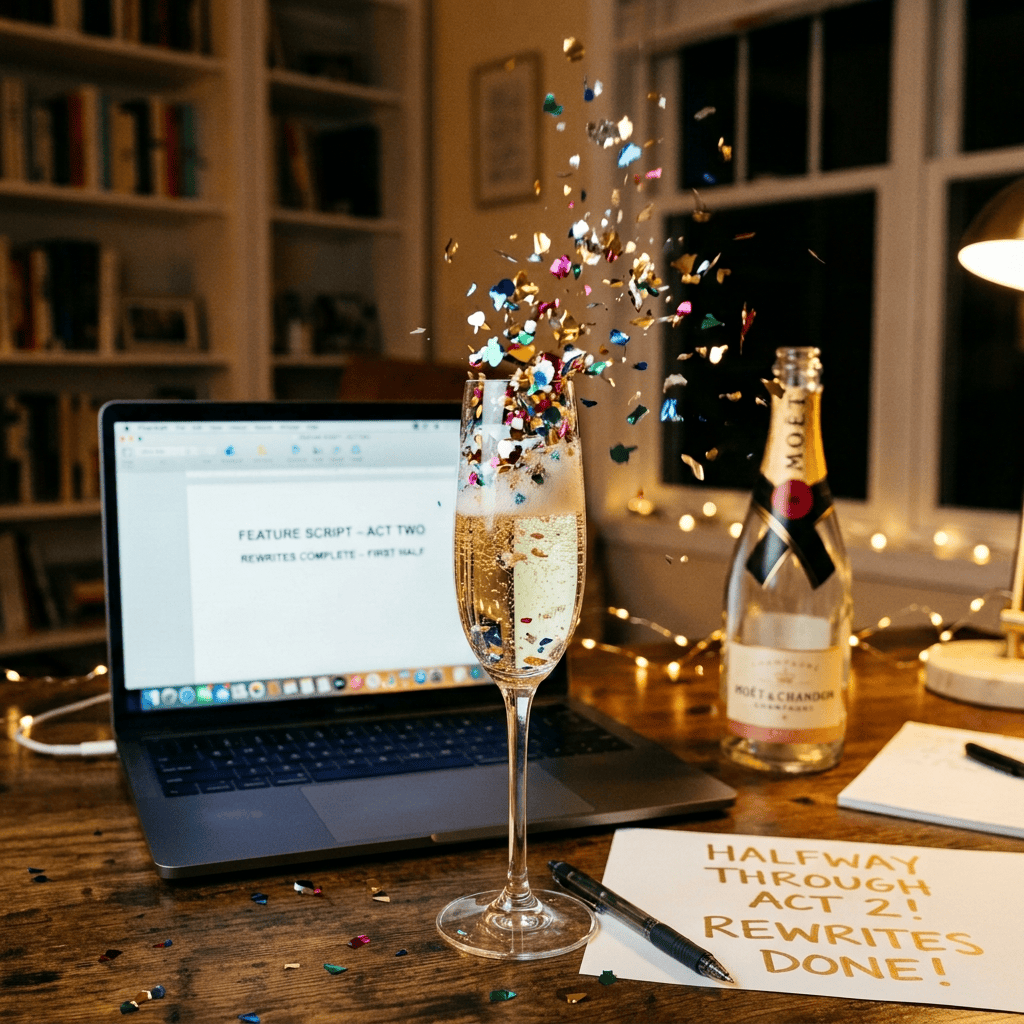
I also mentioned last week that I only had a few more scenes left before completing rewrites on the first half of Act Two. As of October 20th, I officially finished those rewrites! Woo hoo! I am thrilled with how it turned out. Using that extra time in the car office to tackle those coverage notes made achieving this milestone at home possible!

My goal now is to return to the beginning of the script to see how the first half flows with all the new changes, making edits and cuts along the way to tighten it up. Once that’s complete, I’ll dive into the second half of Act Two and start applying the coverage notes there. Plus, I’ll keep up the car office routine before clocking into work.

See you next week!

The Parking Lot Office: Rewriting Act Two Before Clocking In

Good morning, fellow artists! Welcome to another exciting edition of my weekly Hollywood blog. After posting and celebrating some of my Q3 screenwriting wins recently, it’s time to share an update on the second-draft rewrites for my latest feature film script. I am currently implementing my Slamdance coverage notes in the first half of Act Two, and I’m fast approaching the halfway mark of the script!

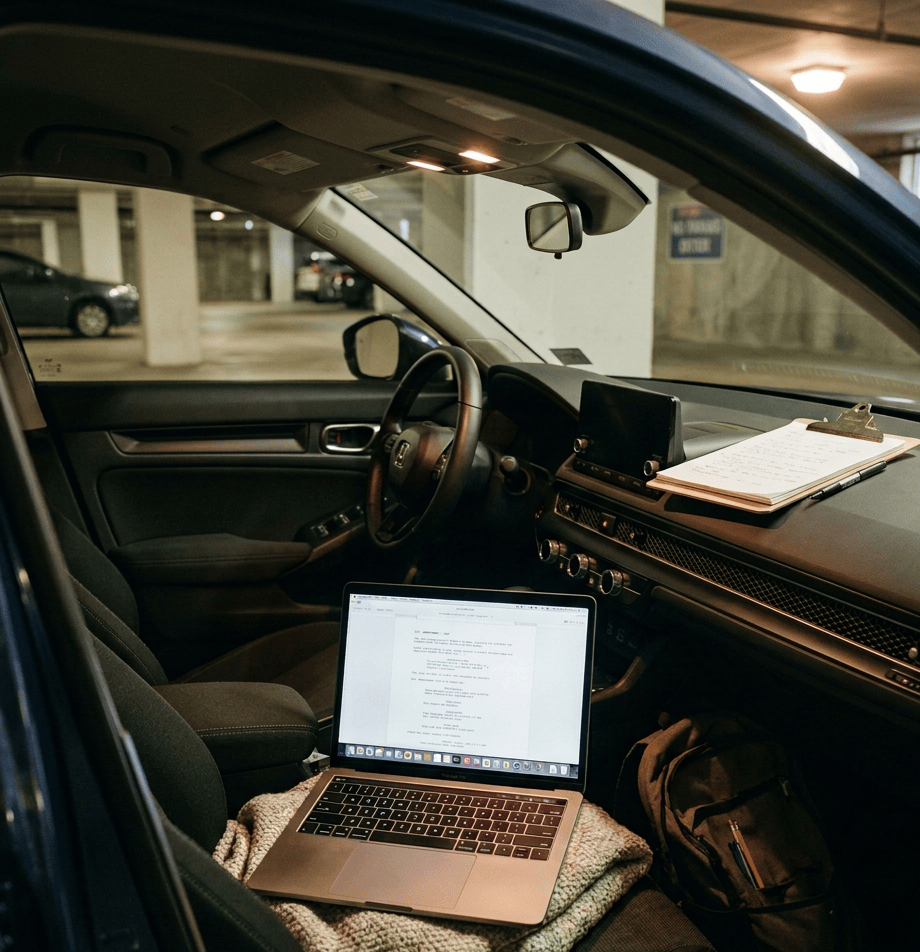
Not only have I been implementing notes in my home office, but I’ve also been doing so right from my car before clocking into my pillar job.

I always arrive early for work. I hate being late for anything—and living in LA, traffic is always a factor! Since I usually have about 40 minutes before I clock in, I decided to use that time last week to tackle more coverage notes alongside other career administration tasks. I even asked my career administration partner to hold me accountable by sending me a simple, yet effective, text message at 8:00am each day!

Working in the car proved to be a major success. I felt accomplished and productive. It gave me a boost of confidence and a sense of excitement right as I clocked into my shift. My “car office” felt private and quiet, with the soft glow of the computer screen providing a surprising sense of comfort. I’m definitely repeating the routine this week to keep taking advantage of that extra time.

I’m excited to finish applying these coverage notes to the first half of Act Two. Just a few more scenes to go before I dive into the second half!

See you next week!

Q3 Screenwriting Wins: Script Rewrites & Major TV Updates

Good morning, fellow artists! Welcome to another exciting edition of my weekly Hollywood blog. As we close out the third quarter, I wanted to use this opportunity to look back at some of the wins that made these past few months so memorable.

Here is a quick look at my 3rd quarter wins:

July 23rd – Table Read: I successfully resurrected and dusted off a feature screenplay, kicking off Q3 with a 10-page class table read at Richard Lawson Studios. From that read, I received a few assignments—one of which was to research and establish casting visions for my Latin characters. I created dedicated Google Drive reference folders featuring images and interview clips for my dream cast (including Ismael Cruz Córdova, Ryan Guzman, Iñaki Godoy, JD Pardo, and Justina Machado), which immediately deepened my characters and strengthened dialogue revisions across Act One.

August 17th – Slamdance Screenplay Clinic Consultation: I completed a highly productive hour-long Zoom consultation with a Slamdance reader based on six pages of comprehensive coverage. A week later, during my career administration meeting, my admin partner pointed out that because the script’s foundation was already so strong, all of the reader’s notes served to elevate and heighten the material rather than tear it down.

August 24th – Rewrite Launch: I officially began draft two rewrites on my latest feature film script, systematically integrating six pages of written coverage alongside the Zoom recording notes.

September 13th – Act One Complete: I fully completed Act One revisions on my latest feature film script, crossing off every single coverage note. These revisions locked in character arcs, clarified early logistics, eliminated on-the-nose dialogue, and converted a key scene into a more conversational tone.

September 15th – Tackling Act Two: I started navigating the first half of Act Two—sharpening scenes for clarity and logistics (including coaching speeches and championship timelines), weaving in the beginnings of two new subplots, and committing to a patient rewrite process.

September 29th The Third Act Series Meeting: Back in June, I mentioned that following our pitch at this year’s Cannes Film Festival and the enthusiastic “goldmine” response we received, our team pivoted to adapting “The Third Act” into a TV series. We recently shifted gears and aligned with a dynamic showrunner and head writer to help shepherd the project moving forward. Richard Lawson set up the meeting, where Kelly Tighe and I got to connect with him, and we are all thrilled to forge this exciting creative partnership.

I’m looking forward to reading your third-quarter wins in the comments section below!

See you next week!

Tackling Act Two: Applying Screenplay Coverage to the Second Draft

Good morning, fellow artists! Welcome to another exciting edition of my weekly Hollywood blog. Last week, I shared the wonderful news that I finished rewriting Act One of my latest feature film script. Thanks to the coverage notes I received from my Slamdance Screenplay Clinic consultation, I was able to achieve this milestone. In the days since, I have moved into the first half of Act Two to continue applying those notes to this next set of rewrites.

Knowing that Act Two is the belly of the beast of a script, I am prepared to move with patience and intention. For example, there were two scenes that recently gave me a little run for my money. In the first scene, the coverage notes asked me to provide a clearer explanation of the timeline and steps needed for the team to win the championship. The second scene required the coach to go into greater detail about one of those specific steps. With both scenes, I found myself writing and deleting several times because I wanted them to be as clear as possible. I moved paragraphs around and stacked up a few variations of the coach’s speech side-by-side to see which one was the strongest. I looked up definitions to find the perfect words, deleted dialogue, and read the scenes out loud. I even improvised new dialogue on the spot to nail what these two scenes were really about. Finally, things clicked, I gained clarity, and the scenes flowed much better!

I was also able to drop in the beginnings of two subplots, which was incredibly satisfying. At the same time, I realized that the script length increased by five pages. I have to remind myself that it’s okay—this is just part of the rewriting process. If anything, it’s better to have extra pages to cut down later than to fall short. It’s also likely that as I move onto more scenes, I will naturally delete things that decrease the page count. I should be prepared for the number to fluctuate as I continue. Ultimately, I won’t know my final page count until I finish this second draft, but I will be ready to edit appropriately to strengthen the story and bring the script to a manageable length.

See you next week!

Act One Complete! From Coverage Notes to Script Breakthroughs

Good morning, fellow artists! Welcome to another exciting edition of my weekly Hollywood blog. Last week, I gave you a peek into my feature script rewrite process following my Slamdance Screenplay Clinic consultation. Today, I’m thrilled to announce that I’ve officially finished rewriting Act One! Crossing off every single coverage note felt incredibly satisfying.

Strengthening this foundation sets me up for success with the rest of the script. By locking in character arcs, logistics, and timelines early on, the overall story is much clearer. Thanks to the extra research, some scenes are now more specific and vivid, while unnecessary moments have been simplified or cut entirely. Additionally, I have removed and rewritten on-the-nose dialogue and even pivoted to a more anecdotal/conversational approach in one of the scenes.

This solid work in Act One gives me a great setup—or a nice plié—into the next batch of coverage notes. Before I jump headfirst into Act Two, I’m going to do one final read-through of Act One to polish up any loose ends.

Draft two of my latest feature film script is coming along smoothly.

See you next week!

Script Rewrites: Transforming Draft Two with Slamdance Coverage

Good morning, fellow artists! Welcome to another exciting edition of my weekly Hollywood blog. Last week, I shared key takeaways from my Slamdance Screenplay Clinic consultation, including how I navigated holding ground on my creative choices and the power of giving feedback time to settle before rewriting.

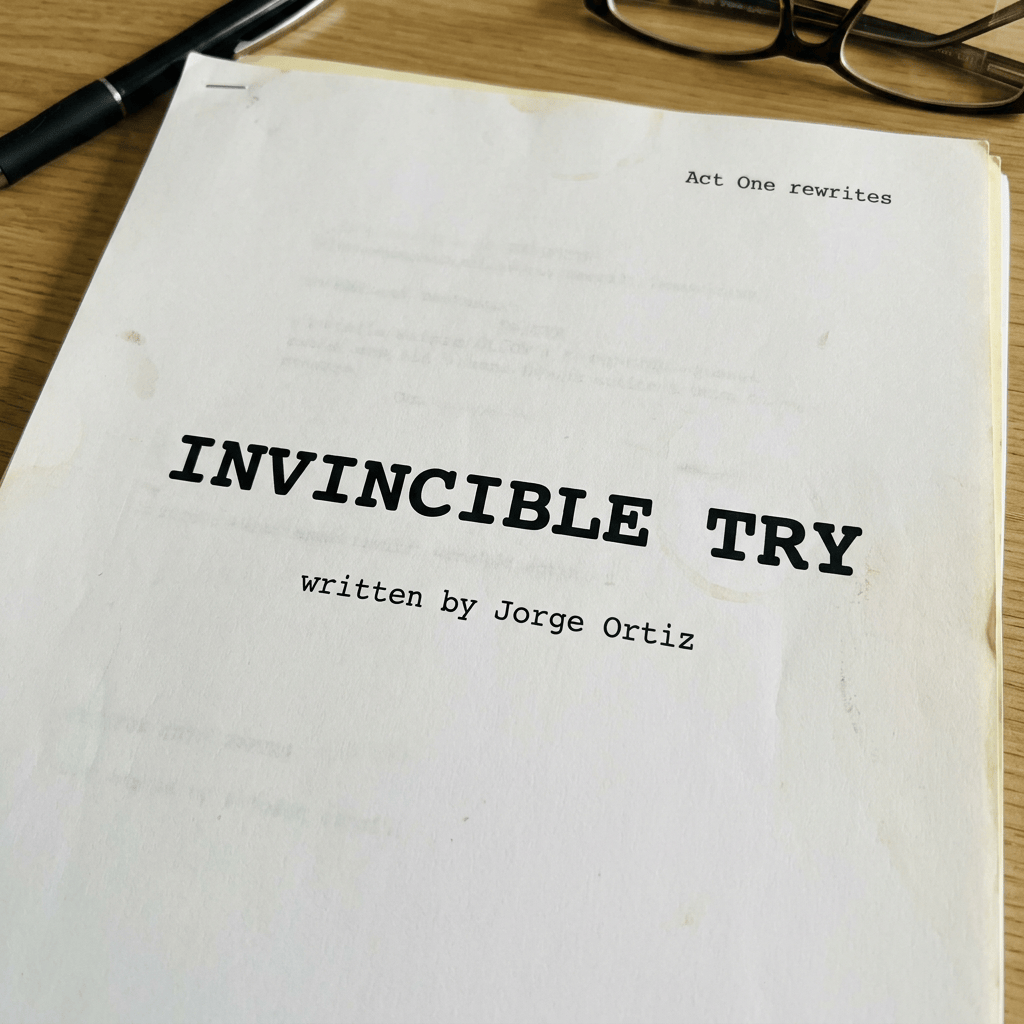
On August 24th, I officially began rewrites for the second draft of my latest feature film script! I was excited, and somewhat anxious, to finally tackle the original six pages of coverage plus the additional Zoom notes and start weaving them into the next draft. The process has been steady—a lesson in patience as I carefully and methodically apply each note. I am still working through Act One, but I don’t feel discouraged because I have already crossed off several items, including those pushing me to be more specific in certain scenes, set up and clarify certain character arcs and logistics earlier, and avoid on-the-nose dialogue. Additionally, I addressed a few technical errors throughout the script, and I’ve mapped out a couple of subplots for Act Two.

For example, regarding specificity, it’s not enough to say that my protagonist is excelling in a particular activity. I have to show exactly how he is excelling. I have to describe what others do versus what he does, and how he does it better. Then, we’ll understand how talented and special he is, and the audience will invest in and root for him even more. To paint a clearer picture, I had to dig into further research to make these scenes sing off the page. It’s taking me down a (good) rabbit hole, and it’s taking a little longer than anticipated, but seeing the difference in the scenes makes it worth it.

I have also found myself rewriting scenes in the moment—like rewriting a scene during a work break or right after taking a shower. While watching TV, I took a quick mental note on how to shift a moment from one scene to another to maximize its impact. These coverage notes are constantly swirling in my head, and I have to be ready to tackle them on the spot as best and as quickly as I can.

Note by note. Step by step. Steady, with intention, wins the race.

See you next week!

Navigating Screenplay Coverage: Lessons From My Slamdance Consultation

Good morning, fellow artists! Welcome to another exciting edition of my weekly Hollywood blog. On August 17th, I had my hour-long Slamdance Screenplay Clinic consultation over Zoom for my latest feature film script. To prepare for this meeting, I read through my reader’s six pages of coverage over and over again, organized them, and highlighted sections so that I knew what I wanted to address.

As soon as my reader and I met over Zoom, we hit it off immediately, and I felt at ease throughout the entire session. They were kind, friendly, funny, incredibly knowledgeable, and also part of the queer community (which only strengthened our connection). They created a safe space from the top, making it clear that these were just ideas they were offering—I could take or leave any of them at any time.

My reader answered questions and provided clarity on the spot, offering fantastic, creative ideas along the way. I had several “a-ha” moments and shared my enthusiasm as we went. There was even a moment where I used a bit of good-humored inflexibility to stick to my instincts on a choice I made for one of my characters; I heard their perspective, shared why I made the choice, and decided to hold my ground. They offered another character suggestion later that I liked, but again, I opted to stick to my original vision. I made sure to audio-record the session because we covered so much territory, and I knew I wouldn’t remember it all. The following day, I listened to the recording with a fresh mind and took extensive notes. My next step is to combine the original six pages of coverage with my Zoom notes and start weaving them into the next draft of my script.

The other thing I’m so proud of was my ability to simply let it go. Once the meeting ended, I told myself not to think about it until the next day. When I finished taking notes on the recording, I gave myself the same reminder: Let it go. Don’t work on it anymore. I decided to let things settle that week, focus on other projects, and dive into the rewrites the following week.

I am so glad I booked this consultation—it was worth every penny because I walked away with clear, exciting, and tangible tools. Because this process was so smooth and constructive, I’m definitely going to hire my reader again once this next draft is done for another coverage round and Zoom session.

During my weekly career administration meeting this past Monday, August 24th, I shared my consultation experience with my admin partner, and he pointed out something that I hadn’t realized throughout the process. He noted that because the foundation of my script was already so solid, the reader’s notes were designed solely to elevate, heighten, and expand it. Never once did the reader suggest the script was trash or that I needed to tear it down and rewrite it from scratch; every note was meant to heighten the material that was already there. Hearing that made me feel even better about where the project stands.

See you next week!